
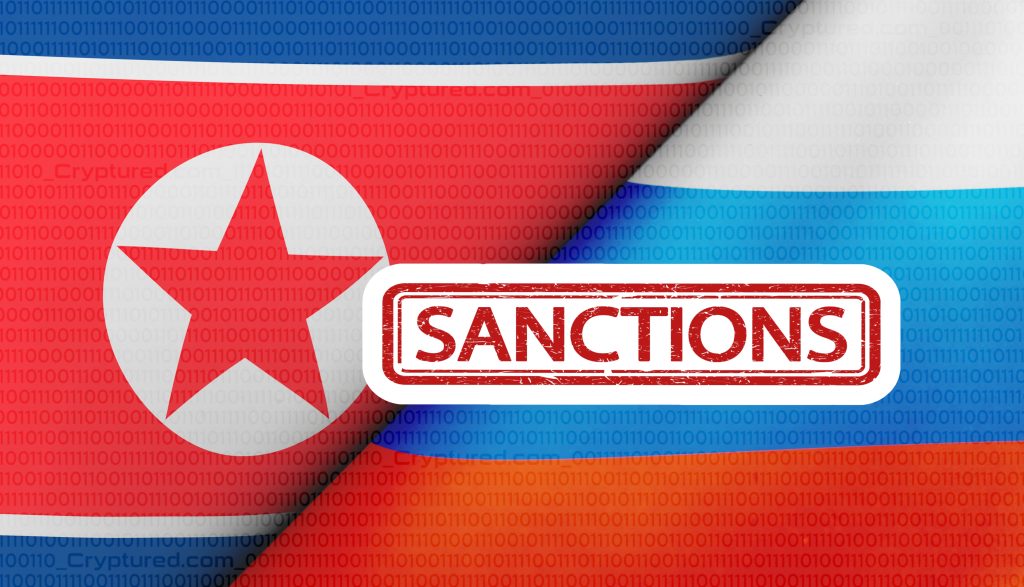
Tuesday was the first time Washington has singled out DPRK targets since Donald Trump took office, as the U.S. placed penalties on Russian and North Korean people and organizations that support the regime’s nuclear and missile programs through information technology (IT) workforce activities.
Song Kum Hyok, a cybercriminal associated with the U.S.-designated threat group Andariel, was the target of action by the Treasury Department’s Office of Foreign Assets Control (OFAC) in a press release for assisting North Korean remote IT workers in obtaining employment at American businesses.
These laborers, who usually work from nations like China and Russia, were allegedly hired and given fake identities and nationalities to generate foreign exchange for Pyongyang in violation of sanctions. In certain instances, they even infiltrated malware into their employers’ networks for potential future use.
The China-based Song allegedly created personas for the workers in 2022 and 2023 using the names, social security numbers, and addresses of U.S. nationals, with the intention of sharing the profits with them, according to the Treasury.
Although it did not elaborate, the State Department also connected the Andariel hacker to an attempted cyberattack against the Treasury in a separate press release on Tuesday.
Song was designated by OFAC, which also imposed penalties on Russian national Gayk Asatryan, his two businesses in the eastern Primorsky Krai region of Russia, and two DPRK organizations for arranging the deployment of up to 80 North Korean IT personnel.
As stated in the press release, the business owner, who was born in Armenia, entered into a 10-year agreement with Korea Songkwang Trading General Corporation of North Korea in mid-2024 to send up to 30 IT specialists to work for his company, Asatryan Limited Liability Company.
Additionally, Asatryan agreed to transfer 50 IT personnel to Fortuna Limited Liability Company, another of his businesses, through Korea Saenal Trading Corporation, another North Korean company.
The agreements between the North Korean and Russian companies coincided with the signing of a historic deal by the leaders of the two nations that increased cooperation in a number of areas, from information and communication technology to military operations. However, the Treasury did not associate the program with any official projects.
Song, Asatryan, and the four businesses were added to OFAC’s list of Specially Designated Nationals for their part in encouraging Pyongyang to evade sanctions. Under the new restrictions, American people and businesses are not allowed to do business with the blacklisted individuals and entities, and all U.S. assets that they hold or control are frozen.
Deputy Secretary of the Treasury Michael Faulkender stated that today’s action highlights the significance of keeping an eye on the DPRK’s ongoing attempts to covertly finance its ballistic missile and WMD [weapons of mass destruction] programs. He also reaffirmed the department’s commitment to thwarting North Korea’s efforts to evade sanctions through malicious cyberattacks, fraudulent impersonation, and virtual theft.
Since Donald Trump took office in January, Washington has mostly focused on other enemies like Iran, China, and Russia; Tuesday’s penalties mark the first new OFAC designations of North Korean individuals and identities.
Nonetheless, the United States has persisted in undertaking additional measures to target North Korea’s illicit cash creation, such as the recent charges of multiple IT workers and an apparently fruitless attempt to shut down an online marketplace based in Cambodia that is connected to Pyongyang’s virtual currency laundering.
The most recent move demonstrates Washington’s ongoing concern over Pyongyang’s use of IT workers, who find remote employment at Western businesses in high-priority industries like technology and cryptocurrencies while working from friendly nations like China, Russia, and Laos.
The number of these operatives in operation is unknown, although last year the old U.N. Panel of Experts overseeing DPRK sanctions calculated that there were about 10,000 IT professionals globally.
These workers’ primary goal is to keep a steady income by working at lucrative jobs at foreign companies, but since last year, their activities have also heavily overlapped with those of North Korean threat actors, who are well-known for their widespread campaigns of virtual currency theft, ransomware attacks, and cyberespionage.
They have also started to change their strategies along the road, utilizing new technologies like artificial intelligence and collaborating with regional facilitators in the US and other nations to trick employers into hiring them.
The State Department’s Rewards for Justice program is offering up to $10 million for information on foreign state-backed cyber actors targeting critical infrastructure in the United States and up to $5 million for information that disrupts North Korea’s illicit finance operations, including sending workers abroad, in an effort to disrupt Pyongyang’s evolving cybercrime and IT worker operations.