
In brief
- Petrobras has built two blockchain applications on Cardano to record the green claims attached to its sustainable aviation fuel and its Diesel R renewable diesel.
- The jet fuel tool issues each environmental attribute as a CS-SAF token so the same benefit cannot be claimed twice.
- Both tools come out of a research partnership with the Cardano Foundation and PUC-Rio, and no date for a commercial rollout has been given.
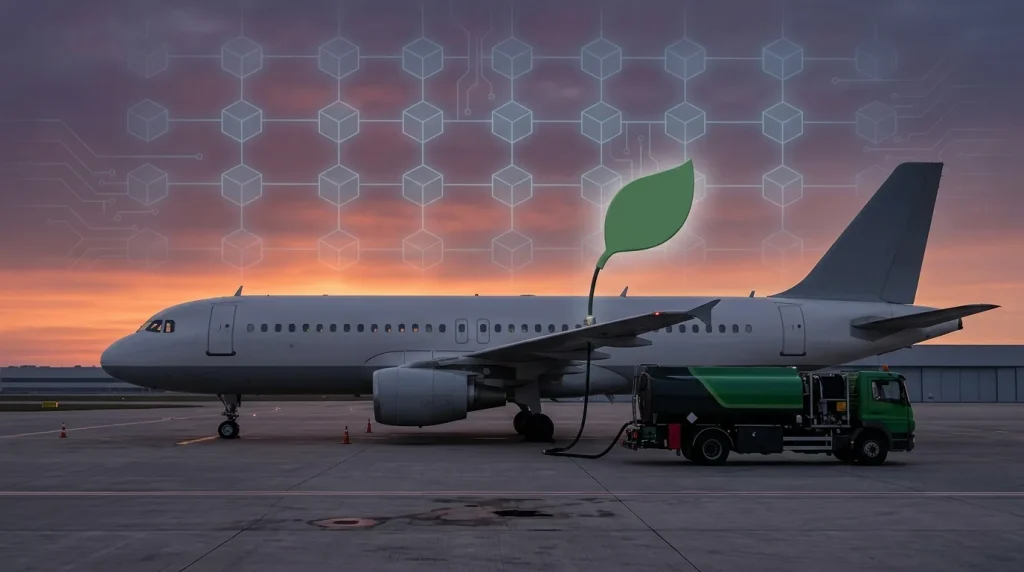
Brazil’s state-controlled oil company Petrobras is using the Cardano blockchain to keep track of who can claim the climate benefit of its cleaner fuels. The Cardano Foundation announced on 30 September that Petrobras, the foundation and the Pontifical Catholic University of Rio de Janeiro (PUC-Rio) have delivered two applications, one for sustainable aviation fuel (SAF) and one for Diesel R, the company’s renewable diesel brand.
The problem both tools target is trust, a use of blockchain in climate work that has been discussed for years. Green fuel claims pass through producers, shippers, airlines and corporate buyers, and each hand-off is a chance for the same benefit to be counted twice or for the data behind it to go missing.
How the jet fuel tokens work
The SAF application uses a book-and-claim model. It separates the environmental benefit from the physical fuel, so an airline, a company or a single passenger can claim that benefit even if the fuel itself was burned on a different route.
According to the foundation’s case study, each SAF attribute is issued on Cardano as a standard token called CS-SAF. Its metadata follows CORSIA, the carbon offsetting scheme for international aviation. The tokens can be minted, moved and retired on-chain, and once retired they cannot be claimed again.
Passengers get their own entry point. They enter their departure and arrival airports in an app, which works out the matching CS-SAF amount and issues a certificate for that journey, linked back to the original fuel record.
Checkpoints for Diesel R
The second tool follows Diesel R from the refinery to the end user. It logs digital checkpoints as the fuel is produced, transported and used, building a single record of its life cycle.
That record is aimed at Scope 3 reporting, which covers indirect emissions across a company’s value chain. Scope 3 figures are often the hardest to check, because the data sits with suppliers and logistics firms rather than with the reporting company.
“The energy transition will depend as much on trust as it does on new fuels,” said Rafael Fraga, the Cardano Foundation’s business development lead for Latin America. “Public blockchain gives us the opportunity to make that trust part of the system by design.”
What comes next for Petrobras and Cardano?
The fuel tools are the latest step in a partnership that began in 2023 with blockchain training for Petrobras staff. In 2025 it widened into energy research with PUC-Rio’s Ledger Labs, with renewable fuels as the first focus.
The announcement gave no fuel volumes and no timeline for a wider rollout. The next thing to watch is whether Petrobras moves either tool out of research and puts real SAF or Diesel R deliveries through it.