
In brief
- The Ethereum Foundation and the Open Anonymity Project have launched zkAPI, a way to pay for AI and other metered APIs without an account tied to your identity.
- Users deposit funds into an Ethereum vault once, then prove with zero-knowledge proofs that they can pay, and the server never learns which deposit is paying.
- The provider still sees prompts and IP addresses, and early use is small: about 0.46 ETH sat in the vault by our count on Oct. 3.
The Ethereum Foundation wants people to be able to use AI models without handing over a billing identity. On Oct. 1 it introduced zkAPI, a payment system built with the Open Anonymity Project that now runs on Ethereum mainnet.
The problem it targets is simple. Every API key points to an account, the account points to a card or wallet, and every prompt joins that record. “Prompts are personal,” wrote Vittorio Rivabella of the foundation’s dAI team, noting that people ask chatbots about their health and their money.
How does zkAPI work?
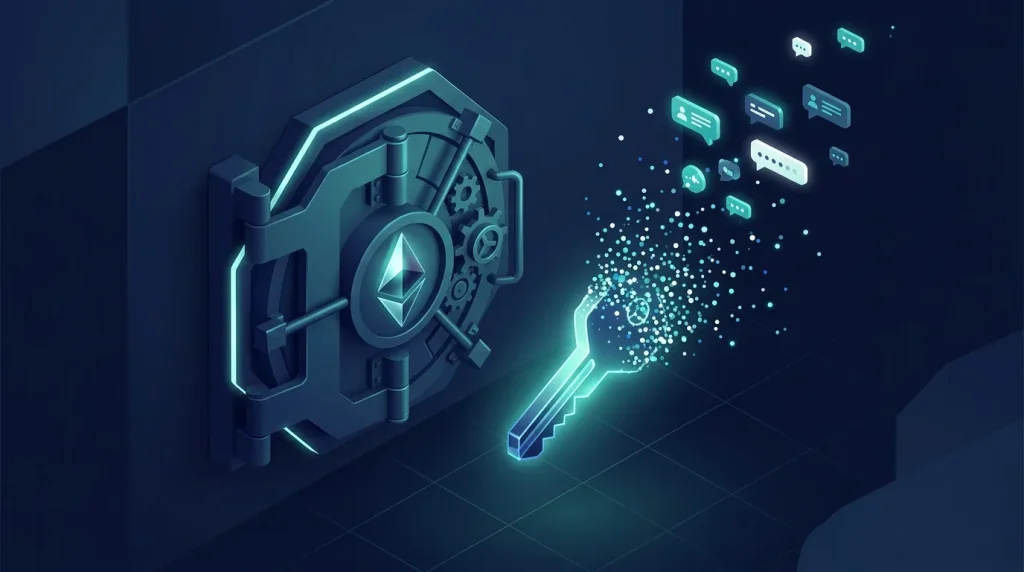
A user deposits funds into a vault contract in one ordinary transaction. The balance then lives as a private note. When an app wants to call an AI model, a small client on the user’s device creates a zero-knowledge proof that a funded, unspent note covers the cost, without saying which note it is.
The zkAPI server checks the proof and issues a short-lived API key with a dollar cap. Prompts go straight from the device to the AI provider. When the key expires, the provider signs a usage receipt and the server deducts only what was used. Anyone who tries to spend the same balance twice leaves a duplicate “nullifier”, which exposes that attempt and nothing else.
The vault checks the same proofs at deposit and withdrawal, so users can pull their funds out on-chain even if every zkAPI server goes offline. The client speaks the OpenAI and Ollama APIs, so existing apps can point at it on localhost.
The design comes from a February post on Ethereum Research by Davide Crapis and Vitalik Buterin. It uses the same kind of cryptography that lets exchanges show proof of reserves without revealing every account.
What it does not hide
The foundation is clear about the limits. zkAPI hides the payment link, not the content. The AI provider still reads the prompts, and it sees network data such as IP addresses unless users route traffic through Tor or a VPN. Reused personal details or writing style can also tie sessions back together.
Use is still tiny. By our count from Blockscout data, the ZkApiVault received 53 successful deposits from 43 addresses between Sept. 30 and Oct. 3, many of them worth about $5. It held about 0.46 ETH (roughly $1,240) and no tokens at 12:36 UTC on Oct. 3. The code sits in the foundation’s zkapi repository on GitHub, which was created in April and has about 200 commits from two contributors.
It is the second Ethereum privacy launch in a week, after Aztec relaunched its zk.money private wallet on Sept. 29, though zkAPI hides who pays for a service rather than who pays whom. The next test for zkAPI is whether AI and RPC providers agree to accept proofs instead of accounts, beyond the Open Anonymity team’s own chat app.